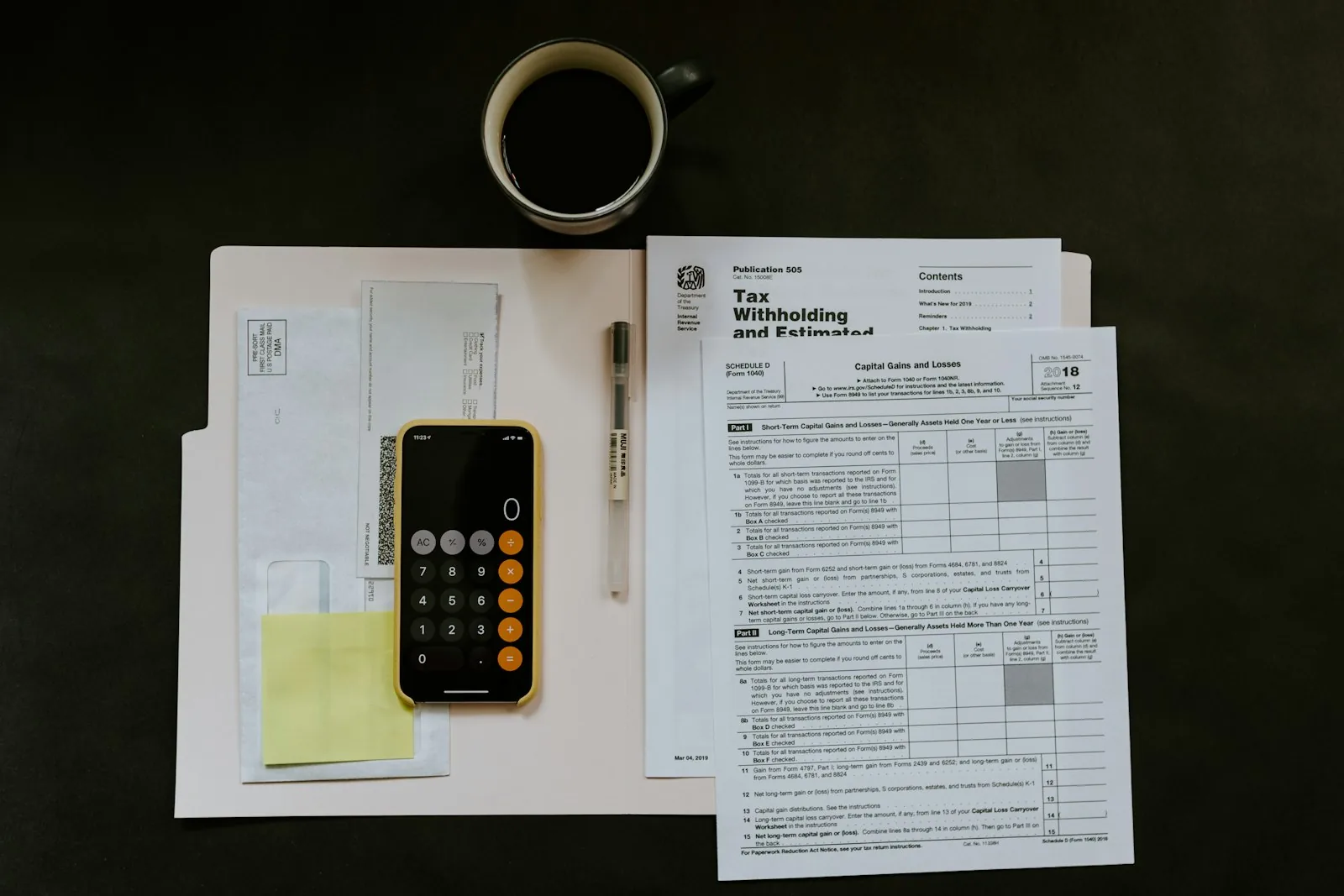
Selling a rental property is one of the most tax-intensive transactions a real estate investor can face. Unlike selling a primary residence, there is no blanket exclusion that wipes out the gain. Instead, you may owe federal capital gains tax, depreciation recapture tax, the 3.8% Net Investment Income Tax (NIIT), and Arizona state income tax, all on the same sale. The good news: with the right planning, you can reduce, defer, or even eliminate much of that tax burden. Below is a plain-language walkthrough of every layer of tax that applies when you sell a rental property in 2025 or 2026, along with strategies to keep more of your proceeds.
Why the Primary Residence Exclusion Does Not Apply
When you sell your personal home, IRC Section 121 lets you exclude up to $250,000 of gain ($500,000 for married couples filing jointly) as long as you owned and lived in the home for at least two of the five years before the sale. A rental property, by definition, is not your primary residence, so the exclusion does not apply.
There is a narrow exception. If you once lived in the property as your primary residence for at least two years, then converted it to a rental and sold it within three years of moving out, you may be able to exclude a prorated portion of the gain. The rules under Section 121 and the "nonqualified use" allocation can be complex, so working with a qualified tax advisor is essential in that situation.
How to Calculate Your Gain on the Sale
Before you can figure the tax, you need to know the taxable gain. The IRS defines it as the amount realized minus your adjusted basis.
- Amount realized: the sale price minus selling expenses such as real estate commissions, title and escrow fees, transfer taxes, legal fees, and staging or repair costs incurred specifically for the sale.
- Adjusted basis: your original purchase price, plus the cost of capital improvements you made over the years (a new roof, HVAC system, kitchen remodel, etc.), minus the total depreciation you claimed or were allowed to claim while the property was a rental.
Keeping thorough records of every improvement and every year of depreciation is critical. Those documented costs directly reduce your taxable gain and can save thousands of dollars.
Capital Gains Tax Rates for 2025 and 2026
The profit from selling a rental property held for more than one year is generally taxed as a long-term capital gain. Long-term capital gains benefit from lower federal tax rates of 0%, 15%, or 20%, depending on your taxable income and filing status.
If you held the property for one year or less, the entire gain is a short-term capital gain, taxed at your ordinary income tax rates (up to 37% for tax year 2025 and 2026, as the TCJA rates were made permanent by the One Big Beautiful Bill Act).
For tax year 2025, the long-term capital gains thresholds are:
- 0% rate: taxable income up to $48,350 (single) or $96,700 (married filing jointly)
- 15% rate: taxable income from $48,351 to $533,400 (single) or $96,701 to $600,050 (married filing jointly)
- 20% rate: taxable income above $533,400 (single) or $600,050 (married filing jointly)
For tax year 2026, the thresholds increase slightly under Rev. Proc. 2025-32:
- 0% rate: taxable income up to $49,450 (single) or $98,900 (married filing jointly)
- 15% rate: up to $613,700 (married filing jointly)
- 20% rate: taxable income above those thresholds
Most rental property sellers with other sources of income will fall into the 15% or 20% bracket on the capital gain portion of the sale.
Depreciation Recapture: The 25% Tax Layer
While you own a rental property, the IRS requires you to depreciate the building (not the land) over 27.5 years for residential property or 39 years for commercial property. Depreciation lowers your taxable rental income each year, but when you sell, the IRS "recaptures" that benefit.
The portion of your gain attributable to accumulated depreciation is called unrecaptured Section 1250 gain. It is taxed at a maximum federal rate of 25%, which is higher than the typical 15% long-term capital gains rate. Depreciation recapture is limited to the lesser of your total gain or the total depreciation you claimed (or were allowed to claim) over the years.
For example, suppose you bought a rental for $300,000 (with $240,000 allocated to the building), claimed $87,273 of depreciation over 10 years, and sold the property for $400,000 after selling expenses. Your adjusted basis would be $300,000 minus $87,273 = $212,727, giving you a total gain of $187,273. The first $87,273 of that gain would be taxed as depreciation recapture at up to 25%, and the remaining $100,000 would be taxed at your applicable long-term capital gains rate.
If you sell the property at a loss, there is no recapture because there is no gain to tax. You may, however, be able to deduct the loss against other income, subject to the passive activity loss rules.
The 3.8% Net Investment Income Tax (NIIT)
On top of capital gains tax and depreciation recapture, higher-income sellers owe an additional 3.8% Net Investment Income Tax. The NIIT applies to the lesser of your net investment income or the amount by which your modified adjusted gross income (MAGI) exceeds:
- $200,000 for single filers
- $250,000 for married filing jointly
- $125,000 for married filing separately
Net investment income includes rental income, capital gains from the property sale, and interest and dividends. Because a large rental property sale can push MAGI well above these thresholds, the NIIT frequently adds a meaningful surcharge. A seller in the 20% capital gains bracket could face a combined federal rate of 23.8% on the long-term gain (20% + 3.8%) and up to 28.8% on the depreciation recapture portion (25% + 3.8%).
Deferring Tax with a Section 1031 Exchange
Section 1031 of the Internal Revenue Code allows you to defer all capital gains tax, depreciation recapture, and NIIT by reinvesting the sale proceeds into another "like-kind" investment property. Since the Tax Cuts and Jobs Act, like-kind exchanges are limited to real property (you can no longer exchange personal property such as equipment).
The timeline is strict:
- 45 days from closing to identify up to three potential replacement properties in writing.
- 180 days from closing (or your tax return due date, including extensions, whichever comes first) to close on the replacement property.
A qualified intermediary must hold the sale proceeds during the exchange period; you cannot take constructive receipt of the funds. If the deadlines are missed or the exchange fails, the entire gain becomes taxable in the year of sale.
To learn more about how 1031 exchanges work and the detailed requirements, read our guide to Section 1031 exchanges.
Cost Segregation and Its Impact on the Sale
Cost segregation studies identify components of a building (wiring, flooring, plumbing fixtures, appliances, landscaping, parking lots) that qualify for shorter depreciation lives of 5, 7, or 15 years rather than the standard 27.5 or 39 years. With 100% bonus depreciation permanently restored under the One Big Beautiful Bill Act for property acquired after January 19, 2025, many of these components can be expensed immediately, accelerating significant tax savings during the holding period.
However, when you sell, the accelerated depreciation on personal property components (Section 1245 property) is recaptured as ordinary income, not at the 25% unrecaptured Section 1250 rate. Additionally, those personal property components cannot be rolled into a Section 1031 exchange because like-kind exchanges are now limited to real property. While cost segregation remains a powerful tool for tax planning during ownership, it is important to model the recapture consequences before selling.
Installment Sales: Spreading the Gain Over Time
If a 1031 exchange is not practical, an installment sale under Section 453 lets you spread gain recognition over the years you receive payments from the buyer. By receiving the sale price in installments rather than a lump sum, you report only the proportionate gain each year, potentially keeping you in a lower tax bracket and reducing or avoiding the NIIT in any single year.
Installment sales do not defer depreciation recapture, which must be recognized in the year of sale regardless of how payments are structured. A qualified tax professional can model whether an installment sale produces a better after-tax outcome than a lump-sum sale in your specific situation.
Reporting the Sale: Forms You Will Need
Selling a rental property requires several IRS forms:
- Form 4797 (Sales of Business Property): used to report the sale and calculate depreciation recapture.
- Schedule D (Form 1040): used to report the capital gain or loss.
- Form 8949: details individual sale transactions that feed into Schedule D.
- Form 8824: required if you completed a 1031 exchange.
- Form 6252: required if you elected an installment sale.
Proper documentation of your original purchase price, all capital improvements, annual depreciation schedules, and selling expenses is essential for accurate reporting and audit protection.
Arizona Considerations for Rental Property Sales
Arizona taxes all income, including capital gains, at a flat 2.5% state income tax rate. However, the state offers a meaningful benefit for long-term gains: a 25% subtraction of net long-term capital gains from Arizona gross income. Starting January 1, 2026, this subtraction applies to all long-term capital gains regardless of when the asset was acquired (previously, only assets acquired after December 31, 2011 qualified).
This effectively reduces Arizona's tax rate on long-term rental property gains to 1.875% (2.5% x 75%). Short-term gains do not qualify for the subtraction and are taxed at the full 2.5%.
Arizona has no separate state-level capital gains tax, no estate tax, and no inheritance tax, making it a relatively favorable state for real estate investors compared to states like California or New York that impose significant state capital gains taxes on top of federal obligations.
We are a tax preparation service in Mesa, AZ staffing both CPAs and Enrolled Agents. Bring us your own numbers and we will tell you what actually applies.
Frequently Asked Questions
How much tax will I owe when I sell my rental property?
It depends on your gain, your income, and how long you held the property. Most sellers owe federal long-term capital gains tax (0%, 15%, or 20%), depreciation recapture tax (up to 25%), and potentially the 3.8% NIIT. Arizona adds up to 1.875% on long-term gains. A seller with $200,000 of gain and $80,000 of accumulated depreciation could owe $40,000 or more in combined taxes without proper planning.
Can I avoid paying taxes on the sale of a rental property?
You cannot entirely avoid the obligation, but you can defer it. A 1031 exchange defers all gain and recapture into a replacement property. An installment sale spreads the gain over multiple years. Some investors hold rental property until death, allowing heirs to receive a stepped-up basis that eliminates the capital gains tax entirely (though the depreciation recapture question is more nuanced).
What happens to depreciation recapture in a 1031 exchange?
A properly completed 1031 exchange defers depreciation recapture along with the capital gain. The deferred depreciation carries over to the replacement property and will be recaptured when that property is eventually sold outside of a 1031 exchange.
Do I owe state tax on the sale in Arizona?
Yes. Arizona taxes capital gains as ordinary income at 2.5%, but long-term gains qualify for a 25% subtraction, reducing the effective rate to 1.875%. You report the gain on your Arizona Form 140.
What selling expenses can I deduct?
Real estate agent commissions, title and escrow fees, transfer taxes, legal fees, and costs of repairs or staging done specifically to prepare the property for sale all reduce your amount realized, lowering your taxable gain.
How K&R Taxes Can Help
Selling a rental property involves multiple overlapping tax layers, strict deadlines, and strategic decisions that can save or cost you tens of thousands of dollars. At K&R Taxes, our team works with Arizona real estate investors to model the tax impact of a sale before closing, structure 1031 exchanges and installment sales, maximize basis through proper documentation of improvements, and ensure every form is filed accurately. Contact us to schedule a pre-sale tax planning consultation and keep more of your investment returns.