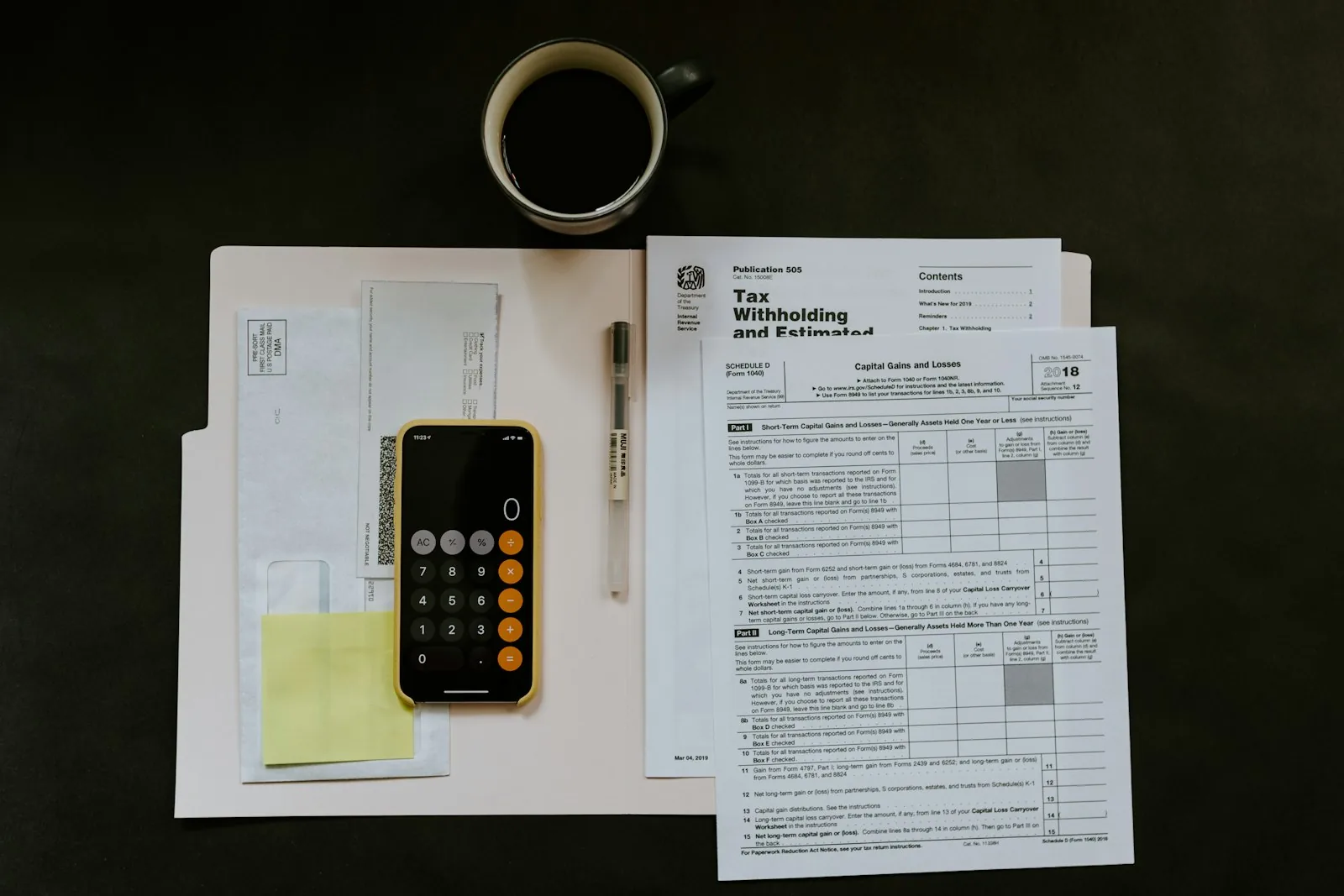
A 1031 exchange lets you sell an investment property and reinvest the full proceeds into another qualifying property without paying capital gains tax in the year of the sale. Named after Section 1031 of the Internal Revenue Code, this strategy defers federal capital gains tax (0%, 15%, or 20% depending on income), the 25% depreciation recapture tax on Section 1250 property, and the 3.8% Net Investment Income Tax (NIIT) for higher earners. For Arizona investors, it also defers the state's flat 2.5% income tax on the gain. The One Big Beautiful Bill Act (OBBBA), signed July 4, 2025, left Section 1031 completely intact, with no dollar cap, no income limit, and no transaction restriction.
Below is everything you need to know to use a 1031 exchange correctly in 2026, including deadlines, identification rules, common strategies, Arizona-specific considerations, and the reporting requirements.
What Is a 1031 Exchange?
In a standard real estate sale, you owe tax on the difference between what you paid (your adjusted basis) and what you sold for. A 1031 exchange, also called a like-kind exchange, replaces that taxable sale with a swap: you "exchange" your relinquished property for a replacement property of equal or greater value. Because you are reinvesting rather than cashing out, the IRS lets you defer the entire gain into the new property's basis.
The exchange does not have to be a direct two-party swap. Most 1031 exchanges are "deferred exchanges" where you sell one property, a Qualified Intermediary (QI) holds the proceeds in a segregated account, and you use those funds to purchase a replacement property within strict IRS deadlines. You cannot act as your own QI, and neither can your attorney, accountant, real estate agent, or anyone who has served in those roles for you within the prior two years.
Any taxpaying entity can execute a 1031 exchange: individuals, partnerships, S corporations, C corporations, LLCs, and trusts. The same taxpayer that sells must be the same taxpayer that buys.
What Qualifies as Like-Kind Property?
Both the relinquished property and the replacement property must be held for productive use in a trade or business, or for investment. Personal-use property, including a primary residence or a vacation home used primarily for personal purposes, does not qualify.
Since the Tax Cuts and Jobs Act took effect in 2018, Section 1031 applies only to real property. The OBBBA made this restriction permanent. Exchanges of personal property such as equipment, vehicles, aircraft, artwork, or franchise licenses no longer qualify.
The definition of "like-kind" for real property is broad. Under IRS Regulation §1.1031(a)-3, any U.S. investment real property is like-kind to any other U.S. investment real property, regardless of grade or quality. A single-family rental can be exchanged for a commercial building, an apartment complex for vacant land, or a retail property for a warehouse. The one geographic restriction: property within the United States is not like-kind to property outside of the United States.
The following are specifically excluded from 1031 treatment under IRC §1031(a)(2):
- Inventory or stock in trade
- Stocks, bonds, or notes
- Other securities or debt
- Partnership interests
- Certificates of trust
The Two Deadlines You Cannot Miss
A deferred 1031 exchange runs on two absolute deadlines. These cannot be extended for any reason except a presidentially declared disaster.
45-Day Identification Period. From the date you close on the sale of the relinquished property, you have exactly 45 calendar days to identify potential replacement properties in writing. The written identification must be signed by you and delivered to a person involved in the exchange, such as the seller of the replacement property or your Qualified Intermediary. Notice to your attorney, real estate agent, or accountant does not count.
Under the Three-Property Rule, you may identify up to three replacement properties regardless of their value. If you need more options, the 200% Rule allows additional properties as long as their combined fair market value does not exceed 200% of the relinquished property's sale price.
180-Day Exchange Period. You must close on the replacement property within 180 calendar days of the sale of the relinquished property, or by the due date (including extensions) of your income tax return for the tax year the relinquished property was sold, whichever is earlier. Miss either deadline and the entire gain becomes taxable in the year of the sale.
The Equal-or-Greater-Value Rule and Boot
To defer 100% of the capital gain, the replacement property must be of equal or greater value than the relinquished property, and you must reinvest all net equity. If you buy down in value, receive cash, or reduce your mortgage debt, the difference is called "boot." Boot is taxable in the year of the exchange, even if the rest of the transaction qualifies as a like-kind exchange.
Common sources of boot include closing costs paid from exchange funds, cash taken out of the exchange, and a lower mortgage on the replacement property than on the relinquished property.
Taxes a 1031 Exchange Defers
A properly structured 1031 exchange defers multiple layers of tax:
- Long-term capital gains tax: 0%, 15%, or 20% depending on taxable income. For 2026, single filers pay 20% above $533,400 of taxable income; married filing jointly above approximately $600,050.
- Depreciation recapture (Section 1250): depreciation previously claimed on the property is recaptured at a maximum federal rate of 25% upon sale. A 1031 exchange defers this by rolling the basis forward.
- Net Investment Income Tax (NIIT): a flat 3.8% surtax on net investment income for filers with modified AGI above $200,000 (single) or $250,000 (married filing jointly). These thresholds are not inflation-indexed.
- State capital gains tax: Arizona taxes capital gains as ordinary income at its flat 2.5% rate. Arizona also allows a 25% subtraction on qualifying net long-term capital gains (A.R.S. §43-1022), which can lower the effective state rate further.
For a high-income Arizona investor, the combined deferred rate can exceed 28% of the gain.
Deferring Depreciation Recapture
When you sell a rental property that you have depreciated, the accumulated depreciation is "recaptured" and taxed at up to 25% federally, a rate often higher than your long-term capital gains rate. A 1031 exchange defers this recapture by rolling the original cost basis from the relinquished property into the replacement property. The depreciation calculation continues as if you still owned the old property.
With the OBBBA permanently restoring 100% bonus depreciation for qualifying property acquired after January 19, 2025, investors who combine a 1031 exchange with a cost segregation study can reclassify building components into shorter-lived asset categories and deduct them fully in year one. This creates significant upfront deductions but increases the potential recapture liability on a future sale, making the next 1031 exchange even more valuable.
It is essential that the investor (or their accountant) carefully track the adjusted basis in every property throughout a chain of exchanges. The gain is deferred, not eliminated, and will be recognized upon the eventual sale of a property outside of a 1031 exchange.
Reverse Exchanges
In most 1031 exchanges, you sell the old property first and then buy the replacement. A reverse exchange flips the order: you acquire the replacement property before selling the relinquished property. This lets you lock in a desirable property without waiting for a buyer.
Reverse exchanges follow the safe harbor rules in IRS Revenue Procedure 2000-37. An Exchange Accommodation Titleholder (EAT), typically an LLC created for the purpose, takes title to the replacement property and "parks" it for up to 180 days while you sell the relinquished property. Within 45 days of the EAT taking title, you must identify the relinquished property you intend to sell. The EAT cannot be you, a close relative, or your agent.
Reverse exchanges are more complex and more expensive than standard deferred exchanges because of the additional legal structure and financing, but they are a valuable tool when timing does not align.
Estate Planning: The "Swap Till You Drop" Strategy
The most powerful long-term application of a 1031 exchange is estate planning. Under IRC §1014, when appreciated property passes to heirs at the owner's death, the basis resets to fair market value as of the date of death. This "stepped-up basis" eliminates every dollar of deferred capital gain, depreciation recapture, and NIIT liability accumulated across a lifetime of 1031 exchanges.
An investor who chains 1031 exchanges across decades, continually deferring gains into larger properties, and holds the final property until death can pass the entire portfolio to heirs with zero capital gains tax. The heirs can sell immediately and owe nothing on the previously deferred gain.
The OBBBA strengthened this strategy by making the federal estate tax exemption permanent at $15,000,000 per person ($30,000,000 per married couple) starting in 2026, indexed for inflation from 2027. For most real estate portfolios, this means the entire estate passes free of both federal estate tax and capital gains tax. Arizona imposes no state estate tax, no inheritance tax, and no gift tax.
Converting a Vacation Home
A vacation home used primarily for personal purposes does not qualify for a 1031 exchange. However, an investor may convert a vacation home into a rental property before selling it. To establish the property as held for investment, most advisors recommend renting it to unrelated parties at fair market rates for at least one to two years, maintaining proper accounting records, advertising on rental platforms, and treating it as a genuine business operation.
The IRS scrutinizes conversions carefully. Document the transition thoroughly and consult a tax professional before relying on this strategy.
Arizona Considerations for 1031 Exchanges
Arizona conforms to federal Section 1031 rules under A.R.S. §43-1021. If your exchange qualifies federally, it qualifies for Arizona income tax purposes as well. A few Arizona-specific details are worth noting:
- Flat 2.5% state income tax: Arizona taxes capital gains as ordinary income at its flat rate. On a $400,000 gain, that is $10,000 in state tax deferred through a successful exchange.
- Capital gains subtraction: Arizona allows a 25% subtraction of qualifying net long-term capital gains under A.R.S. §43-1022. Beginning in tax year 2026, this subtraction applies to all assets, not only those acquired after January 1, 2012.
- No real estate transfer tax: Arizona does not impose a state-level real estate transfer tax, and Maricopa County does not impose a separate transfer tax. This simplifies the exchange process compared to states with transfer taxes.
- No nonresident withholding: Arizona does not require nonresident sellers to withhold state tax at closing, unlike California or Oregon. This is relevant for investors exchanging into or out of Arizona properties.
- No state estate tax: Arizona has no estate tax, no inheritance tax, and no gift tax, reinforcing the long-term estate planning benefits of the "swap till you drop" strategy for Arizona-based investors.
Reporting a 1031 Exchange
You must report every 1031 exchange to the IRS on Form 8824, Like-Kind Exchanges, filed with your tax return for the year the exchange occurred. Form 8824 requires descriptions of both properties, the dates of identification and transfer, any relationship between the parties, the value of property received, cash paid or received, liabilities assumed or relieved, and the adjusted basis of the property given up.
For related-party exchanges (transactions between family members or controlled entities), you must also file Form 8824 for the two years following the year of the exchange. The IRS closely scrutinizes related-party transactions and may disqualify the exchange if it appears structured to avoid tax.
As a tax accountant in Mesa, we keep planning, filing and IRS work in the same office. Bring us your own numbers and we will tell you what actually applies.
Frequently Asked Questions
Is the 1031 exchange still available in 2026?
Yes. The OBBBA, signed July 4, 2025, left Section 1031 fully intact. There is no dollar cap on deferrals, no income limit, and no transaction limit. Multiple proposals to cap 1031 exchanges at $500,000 were rejected during the legislative process.
How many times can I do a 1031 exchange?
There is no limit. Investors routinely chain multiple exchanges across decades, deferring gains into larger properties each time.
What happens if I miss the 45-day or 180-day deadline?
The exchange fails and the entire gain becomes taxable in the year of the original sale. The IRS has never granted an extension to these deadlines for any reason other than a presidentially declared disaster.
Can I do a 1031 exchange across state lines?
Yes. The like-kind requirement applies to all U.S. investment real estate regardless of state. An Arizona rental can be exchanged for a Texas commercial building or a Florida apartment complex. However, some states impose "clawback" rules on deferred gains if the replacement property is later sold. Arizona does not currently have a clawback provision.
What is boot?
Boot is any non-like-kind property or cash received in the exchange. Common examples include cash taken out, reduced mortgage debt, or personal property received alongside the real estate. Boot is taxable in the year of the exchange, even if the rest of the transaction qualifies.
Do I need a Qualified Intermediary?
Yes, for any deferred or reverse exchange. You cannot act as your own QI, and your agent, attorney, accountant, or anyone who has worked for you in those capacities within the prior two years is also disqualified. Choose a reputable QI with proper insurance and segregated accounts.
How K&R Taxes Can Help
A 1031 exchange involves precise deadlines, complex basis tracking, and coordination between your real estate professionals and your tax team. At K&R Taxes, we work with Arizona investors on every stage of the process, from evaluating whether a 1031 exchange is the right strategy to tracking adjusted basis across multiple exchanges and filing Form 8824 accurately. We also integrate 1031 planning with estate planning and cost segregation analysis to maximize the long-term tax benefit.
If you are considering a 1031 exchange in Arizona or want to evaluate your options before selling an investment property, contact our office to schedule a consultation.