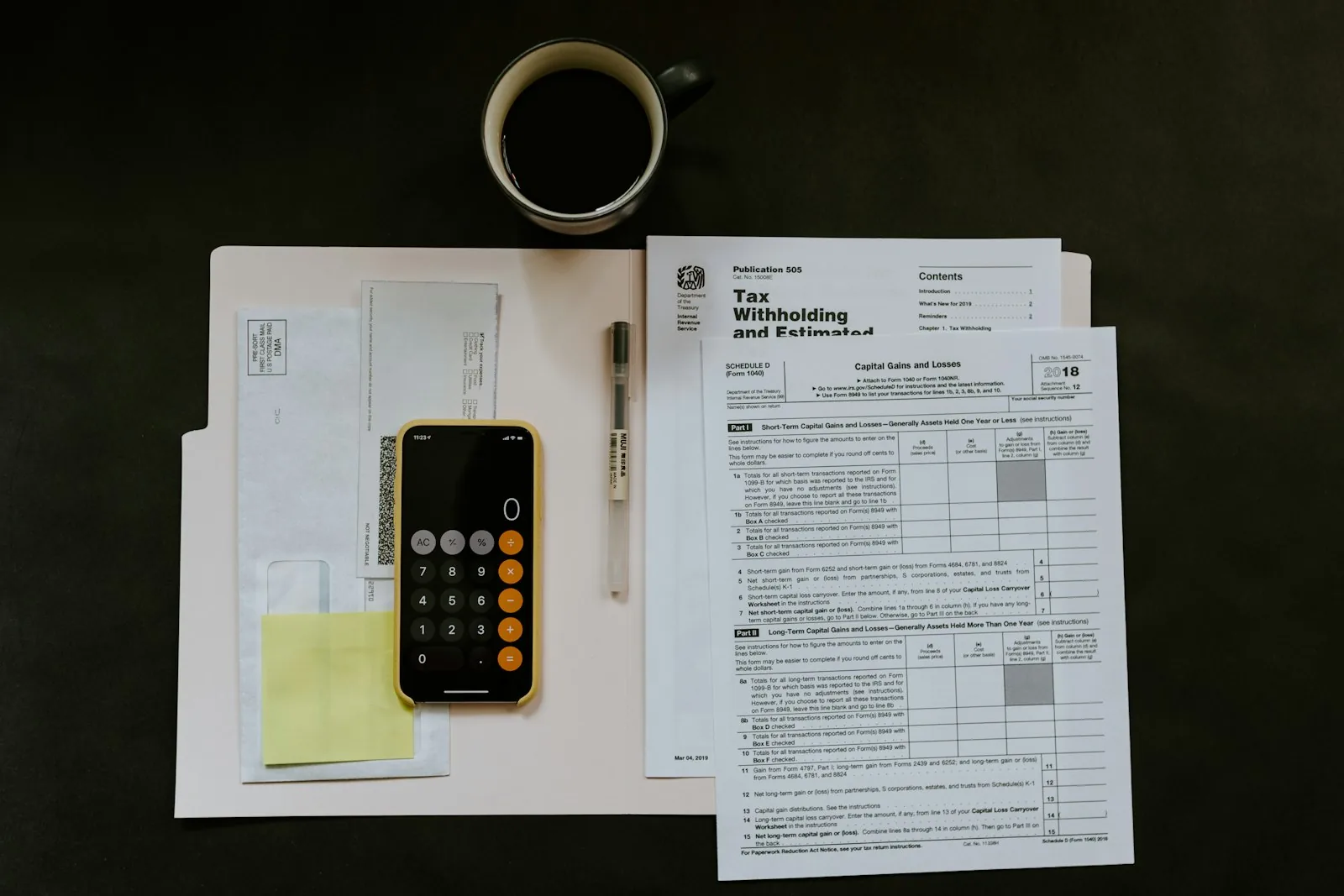
If the IRS has hit you with a failure-to-file, failure-to-pay, or failure-to-deposit penalty, you have real options to get it removed, and one of them just changed for 2026. Below are copy-adaptable letter templates for the three main grounds for penalty abatement, what to attach to each, and what the IRS actually looks for before granting relief. None of these guarantee an outcome, the IRS makes that determination case by case, but a properly structured request is far more likely to succeed than a vague one.
Key Takeaways
- First-Time Abate (FTA) is transitioning to an automatic process called Automatic Exemption from Penalty (AEP) starting summer 2026, applying to tax year 2025 returns forward, so you may not need to request it at all for current-year penalties.
- For prior-year penalties (2024 and earlier), you still have to request FTA manually, by phone, written letter, or Form 843.
- Reasonable cause is the fallback when FTA doesn't apply, and it requires you to show ordinary business care and prudence despite circumstances beyond your control.
- A written statement or Form 843 works for either ground, but the IRS reviews FTA first automatically if you qualify, so a reasonable cause letter should still mention FTA "in the alternative."
- Every letter needs the same core elements: taxpayer identification, the exact notice number, the tax period, the penalty type and IRC section, a factual timeline, and supporting documentation.
- Arizona has its own separate process: Form 290 for state tax penalties, entirely independent of whatever the IRS decides on the federal side.
What changed for 2026: FTA is becoming automatic
First-Time Abate has existed since 2001 as an administrative waiver for taxpayers with a clean three-year compliance history, but it required you to know it existed and ask for it. Per the IRS's own Administrative Penalty Relief page, that's changing: "FTA is transitioning to a new relief called Automatic Exemption from Penalty (AEP), starting Summer 2026." Under AEP, filed or paid late in the current year but timely filed and paid for the three prior years (or 12 consecutive quarters for quarterly filers)? The IRS won't assess the penalty in the first place, no letter required.
This applies going forward, to tax year 2025 returns and 2026 quarterly returns onward. Penalty from 2024 or an earlier year? The old manual process still applies: call the IRS, send a written statement, or file Form 843. The letters below are for exactly that situation, along with any case where you don't meet FTA's clean-history requirement and need to argue reasonable cause instead.

Which penalties actually qualify
FTA (and its successor, AEP) applies specifically to:
- Failure to file (IRC § 6651(a)(1))
- Failure to pay (IRC § 6651(a)(2))
- Tax required to be shown on a return but wasn't, and wasn't paid by the date in the notice or demand (IRC § 6651(a)(3))
- Failure to deposit (IRC § 6656), for employers with payroll or excise tax deposit obligations
It does not apply to accuracy-related penalties, fraud penalties, or the estimated tax penalty. Reasonable cause can reach further, including accuracy-related penalties in some circumstances, but the evidentiary bar is meaningfully higher, per IRS guidance on penalty relief for reasonable cause.
Sample letter 1: First-Time Abate request
Clean compliance history for the prior three years, and your penalty is for 2024 or earlier (or you're not confident AEP applied automatically and want to confirm in writing)? Use this one.
[Your Name / Business Name]
[Address]
[SSN or EIN]
[Date]
Internal Revenue Service
[Address shown on your notice]
Re: Request for First-Time Abatement
Notice Number: [e.g., CP162, CP215]
Tax Period: [e.g., 12/31/2024]
Penalty Type and IRC Section: [e.g., Failure to File, IRC § 6651(a)(1)]
Amount: $[penalty amount]
To Whom It May Concern:
I am requesting First-Time Abate (FTA) of the penalty referenced above. I have
filed all required returns for the three tax years preceding this penalty and
have had no penalties assessed during that period (or any prior penalties were
abated). I have also filed all currently required returns and have paid, or
arranged to pay, the tax due for this period.
Please review my account for eligibility under the IRS's First-Time Abate
policy. If for any reason FTA does not apply, I respectfully request that
this letter also be treated as a request for penalty relief based on
reasonable cause, described in the attached statement.
Enclosed: [copy of notice, proof of payment or payment arrangement]
Sincerely,
[Signature]
Sample letter 2: Reasonable cause request
Don't qualify for FTA (a penalty in the prior three years, for example), or the penalty type isn't FTA-eligible at all? Use this one instead.
[Your Name / Business Name]
[Address]
[SSN or EIN]
[Date]
Internal Revenue Service
[Address shown on your notice]
Re: Request for Penalty Abatement Based on Reasonable Cause
Notice Number: [notice number]
Tax Period: [tax period]
Penalty Type and IRC Section: [penalty type and IRC section]
Amount: $[penalty amount]
To Whom It May Concern:
I am requesting abatement of the above penalty based on reasonable cause.
The following facts explain why I exercised ordinary business care and
prudence but was nonetheless unable to [file/pay/deposit] timely:
[State the facts in chronological order: what happened, when it started, when
it was resolved, and specifically how it prevented timely compliance. Common
qualifying circumstances include serious illness, death in the immediate
family, a natural disaster or casualty that destroyed records, or an inability
to obtain necessary records despite reasonable effort.]
As soon as the circumstances described above were resolved, I [filed the
return / paid the tax / made the deposit] on [date]. I have attached
documentation supporting this explanation.
If I do not qualify for reasonable cause relief for any reason, I request
that this letter also be considered under the IRS's First-Time Abate policy.
Enclosed: [medical records, death certificate, disaster documentation,
correspondence showing the timeline, etc.]
Sincerely,
[Signature]
Sample letter 3: Statutory exception (reliance on erroneous written IRS advice)
This is a narrower, less common ground: you followed incorrect written advice the IRS itself gave you.
[Your Name / Business Name]
[Address]
[SSN or EIN]
[Date]
Internal Revenue Service
[Address shown on your notice]
Re: Request for Penalty Abatement Under IRC § 6404(f) — Erroneous Written
Advice
Notice Number: [notice number]
Tax Period: [tax period]
Penalty Type and IRC Section: [penalty type and IRC section]
To Whom It May Concern:
I am requesting abatement of the above penalty under the statutory exception
for reliance on erroneous written advice from the IRS. On [date], I submitted
a written request to the IRS asking [describe the question]. In response, I
received written advice dated [date] stating [quote or closely paraphrase the
advice]. I relied on this advice in good faith when I [describe the action
taken], which resulted in the penalty referenced above.
I have attached a copy of my original written request and the IRS's written
response.
Sincerely,
[Signature]
What to attach, regardless of which letter you use
Documentation is what separates an approved request from a denied one. At minimum, include a copy of the notice itself, proof of the tax being paid or a payment arrangement in place, and any records supporting your stated grounds (medical documentation, disaster declarations, correspondence, canceled checks). Filing Form 843 rather than a standalone letter? The current instructions require the exact tax period, the dollar amount, the type of tax, and the IRC section behind the penalty, the same core facts as the letters above, just organized into the form's line items instead of prose.

What not to do
Don't promise or assert that the IRS "will" remove the penalty; the correct framing is always a request, not a demand. Don't combine unrelated tax years or tax types on a single Form 843 or letter unless the instructions specifically allow it, each period generally needs its own request. And don't assume ignorance of the law, reliance on a general "I didn't know," or simple lack of funds will support reasonable cause; those are explicitly excluded grounds under IRS guidance.
Arizona has its own separate process
None of the above touches Arizona state tax penalties. Also owe a late-filing or late-payment penalty to the Arizona Department of Revenue? That's a completely independent request using Arizona Form 290, reviewed by ADOR's Penalty Review Unit under the same general "reasonable cause, not willful neglect" standard, but with its own form, its own documentation requirements, and its own mailing address. Getting an IRS penalty abated has no bearing on an ADOR penalty for the same tax year, and vice versa, they need to be requested separately.
What business owners should watch for
Penalty tied to payroll tax deposits (a failure-to-deposit penalty)? FTA and the incoming AEP both apply, but only if you haven't had four or more FTD penalty waivers in the prior three years and the failure wasn't related to avoiding electronic deposit requirements. Getting payroll deposits on a compliant schedule going forward matters as much as resolving the current penalty, since a second deposit failure inside the look-back window can disqualify you from this relief entirely. Our Payroll Services team builds deposit compliance into ongoing processing specifically to prevent the pattern that costs clients this relief down the line.
Getting your request right the first time
A penalty abatement letter that's missing the notice number, the exact IRC section, or a clear factual timeline is one of the more common reasons a request gets denied on procedural grounds rather than the merits. Our IRS Representation team prepares these requests with the documentation the IRS actually expects to see, and our guide to when hiring professional representation makes sense walks through that decision if you're still weighing it yourself. Our Accounting & Business Performance team can also help confirm your compliance history before you submit, so you know which ground actually fits your situation. K&R Strategic Partners is a Mesa CPA firm working with owners across the Valley. Book a free discovery call and we'll review your notice together.
Frequently Asked Questions
Do I need a lawyer to write a penalty abatement letter?
No. You can write and submit the request yourself using the templates above. Professional help becomes more valuable for larger penalty amounts, complex reasonable cause arguments, or when a prior request has already been denied.
What is First-Time Abate (FTA)?
An administrative waiver for failure-to-file, failure-to-pay, and failure-to-deposit penalties, available to taxpayers with a clean three-year compliance history. Starting summer 2026, it's being replaced by an automatic version called AEP for current and future tax years, so eligible taxpayers may not need to request it at all going forward.
What qualifies as reasonable cause for an IRS penalty?
Circumstances beyond your control that prevented timely compliance despite ordinary business care, such as serious illness, death in the immediate family, a natural disaster that destroyed records, or an inability to obtain necessary records despite reasonable effort. Ignorance of the law and lack of funds generally don't qualify.
Can I request both FTA and reasonable cause in the same letter?
Yes, and it's a good practice. The IRS applies FTA first if you qualify, so a reasonable cause letter should also ask that FTA be considered as an alternative ground.
Does getting an IRS penalty abated also remove my Arizona state penalty?
No. Arizona penalties are handled entirely separately through Arizona Form 290 with the Department of Revenue's Penalty Review Unit, regardless of what the IRS decides on the federal penalty.
What happens if my penalty abatement request is denied?
You can appeal a written denial to the IRS Independent Office of Appeals within the timeframe stated in the denial notice. A denial on one ground (FTA, for example) doesn't prevent you from separately requesting reasonable cause for the same penalty.